In-Plant vs. Portable Metal Roof Panel Rollforming Machines
Rollforming machines stand at the forefront of metal construction growth. Whether in-plant manufactured, prefabricated panels from a supplier, or panels run on-site using a portable rollformer, metal panel machines are driving the industry forward.
/Rick Zand/11 min read
As the metal roofing industry continues to grow, so does the demand for quality panels. While many contractors concentrate on standing seam roofs, the popularity of metal siding is increasing with new styles, like board and batten, and a variety of patterns, including rustic woodgrain finishes along with custom designs.
Rollforming machines stand at the forefront of metal construction growth. Whether manufactured in-plant, purchased prefabricated from a supplier, or panels run on-site using a portable rollformer, metal panel rollforming machines are driving the industry forward.
In this article, you’ll learn about large in-plant and portable rollforming machines, and we’ll look at specific examples, like the New Tech Machinery (NTM) SSQ II™ MultiPro Roof and Wall Panel Machine, Englert’s MetalMan Multi-Panel, Schlebach’s Quadro Series, and for in-plant machines, Bradbury Group’s custom-built rollforming machines, and the Metal Rollforming Systems (MRS) Signature Series.
The Roll Forming Process
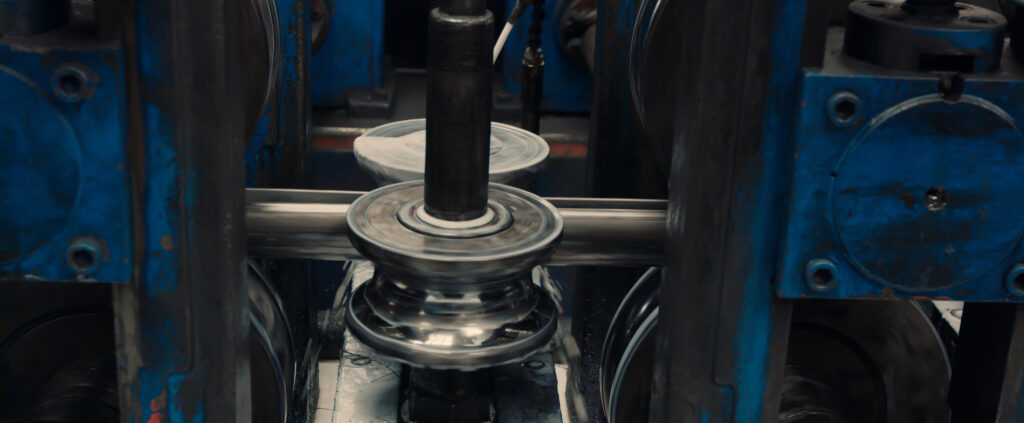
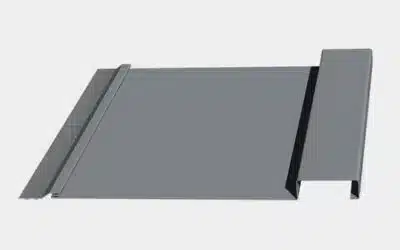
If you’re new to metal panel rollforming, understanding the rollforming process is the place to start. Rollforming involves feeding metal coils through sequential roller dies that bend the material gradually until the desired profile is achieved. Basically, you’re bending the metal to a desired shape and leaving a leg or flange to connect them. Panels can be affixed by screws, nails or clips, and fasteners can be hidden or exposed, depending on the panel type.
Key steps to rollforming include:
1. Material Feeding: Metal coils are loaded and fed into the machine. In-plant machines can handle more coil than portable rollformers; however, portable machines can carry thousands of pounds of coil with multiple reels affixed to the machine.
2. Incremental Shaping: Each forming roller applies small, precise bends to the metal, forming the panel’s profile.
3. Cutting and Punching: Either prior to or after the profile is formed (depending on pre-cut or post-cut shears), the metal is cut to length and, if necessary, punched for fasteners or other needs. In-plant machines generally have a notching or punching mechanism. Some rollformers, like NTM’s SSQ II MultiPro, offer built-in panel notching as an additional option (notching is not recommended for certain panel profiles such as wall and siding or the TRQ250 2.5” trapaziodal panel; or copper or stainless steel) .
4. Automation: Rollforming machines integrate automation for profile adjustments, cutting, and panel lengths, improving efficiency and reducing manual labor. Computer controllers allow operators to manage these specifications either by pressing jog/ run buttons or, in the case of more sophisticated units, you can upload cut lists, program job specs, and troubleshoot machine issues.
This process is ideal for producing high-strength, lightweight metal panels for roofing, siding, and seamless gutters.
Metal Materials
Painted steel, copper, and aluminum are the most commonly used materials for fabricating panels. Most suppliers offer a variety of colors, designs, and patterns in multiple sizes and gauges.
Portable Roll Forming Machines
Portable rollforming machines are designed for flexibility, allowing contractors to produce panels directly at the job site. These machines eliminate transportation costs and enable on-demand panel production, providing significant advantages.
Cutting out the middleman saves manufacturing and panel transportation costs, decreases the likelihood of damaged panels due to transit, eliminates the risk of delays, mistakes in sizing or numbers of panels, and gives the contractor full control over the operation from start to finish.
Other advantages of portable rollforming include no limit to the length of panels. Whereas you may be limited by the size of the truck transporting the panels, when run on-site, portable rollformers can produce panels at any length. With the proper equipment, they can even be raised to roof level, and panels run directly onto the roof so that the panels don’t need to be lifted from the ground to the roof. This is especially handy for industrial projects that demand extremely long panels.
Another advantage of portable rollformers is their ability to operate in-plant or on-site. Many panel manufacturers with chop-and-drop operations (where the manufacturer isn’t a contractor) use portable rollformers in-plant to fabricate panels for metal roofing contractors. However, they can also transport the machine to the job location where they fabricate and “drop” the panels for installation.
Drawbacks:
Speed: While some machines can produce at 150’ per minute, most top out at around 75’ per minute. Also, gas engines run panels faster than electric motors, so some variable speeds exist even with a single machine.
Workload: Portable rollformers, while they are often used as in-plant machines, aren’t typically built for non-stop use.
Profile customization: While many roof and wall panel profiles, including standing seam, are available for portable rollformers, specialty architectural profiles that require customized tooling are not always an option with a portable rollformer.
Portable Rollformers
Some manufacturers, like Englert, manufacture mostly fixed-panel roofing machines, which only produce one profile. For this article, we’re featuring machines that offer multiple profiles to show optimal versatility. Prices may vary and are subject to change on all machines listed.
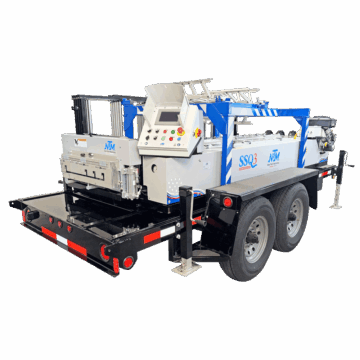
New Tech Machinery’s SSQ II™ MultiPro Roof and Wall Panel Machine
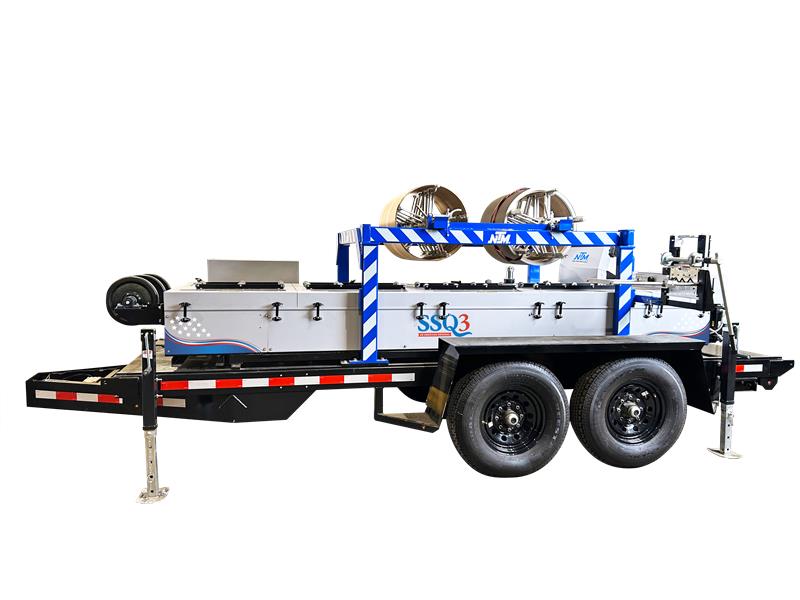
The SSQ II MultiPro, NTM’s flagship rollformer, is the most versatile portable rollforming machine on the market, with 16 available profiles for standing seam, wall panels, soffits, and underdecks. It stands out for its ability to produce multiple roofing profiles on-site, making it a go-to machine for contractors needing flexibility. The SSQ II MultiPro starts at $63,400. This price does not include a profile.
Features include:
Multiple Panel Profiles: The SSQ II can form 16 different profiles with up to a 2.5” seam and allows operators to quickly switch between panel types using quick-change tooling.
Automation Features: This model offers NTM’s optional UNIQ® Automatic Control System with a touchscreen, which simplifies operation and profile adjustment. It also features a hydraulic drive and shear for smooth, reliable performance. As added options, you can purchase a notching system which requires the UNIQ® Automatic Controller. (Note: Notching is not recommended for copper or terne coat stainless)
Quick-change Tooling: Profile changeovers can be performed in as little as 45 minutes, allowing contractors and manufacturers to provide a variety of panel profiles with little downtime.
Wide Range of Metals: The SSQ II can form panels from various metals, including aluminum, copper, painted steel, and terne coat stainless steel.
Englert MetalMan Multi-Panel
The Englert MetalMan Multi-Panel is another popular choice for contractors who need to produce metal panels on-site. The MetalMan delivers precision and ease of use. The MetalMan Multi-Panel starts at $47,500. This price does not include a profile.
Features include:
Profile Flexibility: The MetalMan can produce nine snap-lock and mechanically seamed panel profiles, with up to a 2” seam.
Quick-Change Tooling: This machine also allows for easy and fast profile changes, making it efficient for projects that require a variety of panel types.
High Speed: Approximately 90’/ min. (Speed should be decreased 25-50% when using sealant pump depending on temperature.) NTM’s SSQ II MultiPro maxes out at 75’/ min. for point of comparison.
Optional Electric Seamer: For use with A1300/A1301 or S2400/S2500 panels. For more on electric seamers, click here.
For a full comparison between the SSQ II MultiPro and the Englert MetalMan, click here.
Schlebach Quadro Series
The Schleback Quadro Series produces standing seam roof, soffit, and wall panels. Prices start at $84,000. This price does not include a cassette profile.
Features include:
Profile Cassettes: Installed with a forklift, a cassette can make changeovers between two profiles complete in a matter of minutes.
Profile Options: 11 profile options.
Pre-cut Shears: The pre-cut allows for a cleaner cut and requires less maintenance.
CINCO Controller: Features the TopView™ 3D roof design software to program three-dimensional project imaging.
High Speed: Up to approximately 65’/ min.
For a full comparison between the SSQ II MultiPro and the Schlebach Quadro, click here.
All three machines provide multiple profile options, flexibility, speed, and the ability to produce custom lengths and profiles at the construction location. The SSQ II MultiPro offers more profile options, including wall panels.
Englert Multi-Panel
In-Plant Roll Forming Machines
In-plant rollforming machines, while not portable, offer increased production capacity and automation for high-volume projects. These machines are larger, averaging around 15,000 pounds (without coil) and 20’ to 30’ long. They are fully automated and designed for continuous production to meet the demands of manufacturers supplying roofing panels in bulk. They work at a much faster pace than portable rollformers, even up to 400’ per minute.
In-plant machines offer the same profiles as portable rollformers but can also perform custom jobs to produce special architectural panels. If you purchase a large in-plant rollformer, some machine manufacturers, like the Bradbury Group, can customize the machine to your needs.
Several rollforming manufacturers produce in-plant machines. These listed are two popular brands, but other top names include ASC Machine Tools, Inc. and the Roll Former Corporation. Prices may vary and are subject to change on all machines listed.
In-Plant Machine Advantages:
Speed—Average from 150’/ min. to 300’/ min.
Large panels—Can produce panels much wider than can be produced on portable rollformers.
Specialty panels—Can be customized to produce special architectural panels.
Constant run time—Unlike portable rollformers, in-plant machines can run non-stop all day.
In-Plant Machine Drawbacks:
May require longer changeover times and more maintenance: Because the machines are so large with multiple forming stations, profile changeovers can take a half day or longer. Also, given the size of the machine, maintaining and lubricating the rollers takes longer.
Cost: Large in-plant machines are typically much more costly, with an average starting price at around $400,000. Once you add customization, options, and profiles, the price can increase to over $1 million. This may be overkill for contractors specializing in residential and commercial roofing and siding who don’t need such a large-capacity machine.
Stationary: In-plant machines are extremely large and heavy and cannot be transported to a job site.
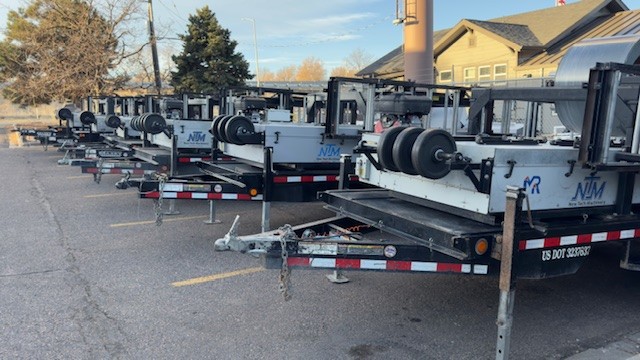
Space: You need a large plant space to accommodate the machine, equipment, and panels. In comparison, portable rollformers can be kept in a covered trailer and transported to various job sites.
Bradbury Group
The Bradbury Group is well known for its in-plant machines. Bradbury offers many options, as their machines are custom-built according to customer specifications. Therefore, the prices can range from a few hundred thousand to over a million dollars, although they try to work within your budget.
Options and features include:
Specialized Shears: Pre- or post-cut shear, for precision and speed, Flying shear, and the B.O.S.S.™ Shear, a high-speed, orbital servo shear designed to enhance metal sheet cutting in roll forming lines.
High Speed Production: Up to 300’/ min.
Computer Controller: Length and batch quantities can be downloaded from a remote scheduling PC with additional software and cabling or entered directly at the online operator interface.
Single or Double-Deck: Variations include Bradbury Single High, Bradbury Double High®, Bradbury Rafted®, Hayes Single Level™, and the Hayes Dual Level™
Accuracy: Dual acceleration arms for consistent accuracy during cuts
Smooth operation that reduces noise and prevents material damage
Notching Feature: Supports notching or slitting for enhanced flexibility
Economical Size: Compact integration with roll formers for efficient use of space
Metal Rollforming Systems (MRS) Titan Series
The MRS Titan Series is a robust in-plant roll forming machine designed for high-efficiency production of metal roofing panels. The Titan lines start at $410,000 and include a coil reel, precut shear, feed table, rollformer, and controls. Installation is also included in the cost of the machine.
Features include:
High-Speed Production: The Titan Series is capable of producing roofing panels at 200’ per minute.
Durability and Flexibility: The machine can produce commercial, residential, and agricultural panels, including board and batten and double-Dutch profiles.
Single or Double-Deck: Available as either a single or double-deck rollformer. You can purchase a single deck and upgrade to a double deck if you see the need. The changeover time between the top deck and bottom deck is approximately 30 seconds.
Variable Frequency Drive (VFD): MRS’ VFD electric motor drive system allows the shear to cut any length sheet up to 100 feet. The 4-sided shear blades can be used as precut or postcut shears.
Bottom Line on In-Plant vs. Portable Rollformers
Keep in mind, portable rollforming machines can be used as in-plant machines. For small or medium-sized operations, like those of regional contractors or manufacturers, they’re usually more than sufficient. Portable machines, like NTM’s SSQ II MultiPro, Englert’s MetalMan Multi-Panel, and Schlebach’s Quadro Series, offer on-site panel customization, making them ideal for residential or commercial jobs and at remote job sites. They allow contractors to produce panels as needed, reducing waste and eliminating transportation costs.
On the other hand, in-plant machines, such as the Bradbury custom machine or the MRS Signature Series, are designed for high-volume production. These machines offer greater automation and speed, making them ideal for large-scale manufacturers looking to produce panels in bulk to meet heavy manufacturing demands.
Understanding your company’s market, location, and production requirements will help determine whether a portable or in-plant rollforming machine is right for your needs. If you’re just starting out in the industry, spending hundreds of thousands of dollars may not be in the cards for you. There are plenty of portable rollforming machine options available that won’t bust the bank. Many NTM customers started out with an SSR MultiPro Jr. or an SSH MultiPro and grew their operations in a short amount of time.
However, if you’ve been manufacturing panels for some time and find yourself growing out of the portable rollformers you’ve been using, an in-plant machine might be the right investment. You’ll get the best of both worlds as you’ll still have the portable rollformers for on-site work and now you can help meet the demands of the ever-growing metal construction industry.
For information about the SSQ II MultiPro, or any of NTM’s metal panel or gutter rollforming machines and accessories, contact us to speak to one of our expert account managers.